Common Warning Signs Patients Ignore Before Major Heart Problems
January 28, 2026
admindrshridhar
0 Comments
Common Warning Signs Patients Ignore Before Major Heart Problems
Heart disease rarely appears overnight. In most cases, the body sends early warning signals weeks, months, or even years before a major heart event like a heart attack or heart failure. Unfortunately, many people ignore these signs, dismissing them as stress, acidity, aging, or general tiredness.
At Active Heart Clinic, Dr. Shridhar Padagatti often sees patients who say, “I had symptoms, but I didn’t think they were serious.” Recognizing these early signs can be life-saving.
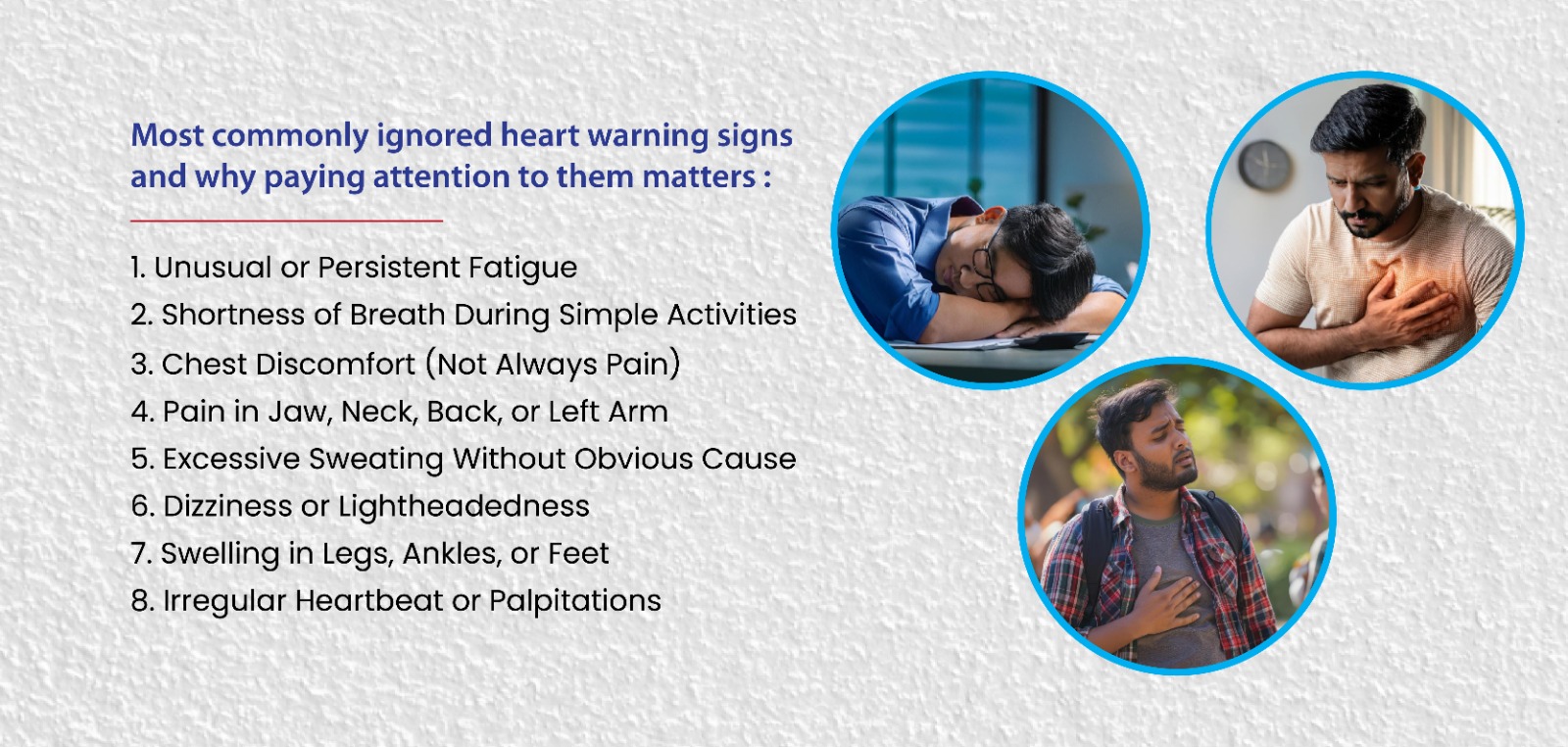
Let’s look at the most commonly ignored heart warning signs and why paying attention to them matters.
1. Unusual or Persistent Fatigue
Feeling tired after a long day is normal. But constant fatigue, especially without heavy physical activity, is not.
Why it matters:
When the heart isn’t pumping efficiently, your muscles and organs don’t get enough oxygen-rich blood. This leads to exhaustion—even after adequate rest.
1. Often ignored as:
2. Work stress
3. Poor sleep
4. Aging
5. Vitamin deficiency
When to be cautious:
If fatigue lasts for weeks, worsens with mild activity, or is accompanied by breathlessness, it’s time to get your heart checked.
2. Shortness of Breath During Simple Activities
Getting breathless while climbing stairs or walking short distances may indicate your heart is struggling.
Why it matters:
A weak or overworked heart cannot pump blood effectively, causing fluid to back up into the lungs, making breathing difficult.
Often ignored as:
1. Lack of fitness
2. Weight gain
3. Asthma
4. Weather changes
5. When to be cautious:
If breathlessness occurs at rest, while lying down, or wakes you up at night, it should never be ignored.
3. Chest Discomfort (Not Always Pain)
Many people expect a heart problem to cause severe chest pain. In reality, early heart-related discomfort can be mild.
What it may feel like:
1. Pressure
2. Tightness
3. Burning
4. Heaviness
5. Mild ache
Often ignored as:
1. Acidity or gas
2. Muscle strain
3. Anxiety
When to be cautious:
If chest discomfort appears during physical or emotional stress and eases with rest, it may be a sign of reduced blood flow to the heart.
4. Pain in Jaw, Neck, Back, or Left Arm
Heart-related pain doesn’t always stay in the chest. It can radiate to other parts of the body.
Why it matters:
Nerves connected to the heart also supply the jaw, neck, shoulders, and arms—especially the left arm.
Often ignored as:
1. Dental issues
2. Cervical spondylosis
3. Shoulder pain
4. Bad posture
When to be cautious:
If pain appears suddenly, comes with exertion, or is accompanied by sweating or nausea, seek medical evaluation.
5. Excessive Sweating Without Obvious Cause
Cold sweats or unusual sweating—even in cool weather—can be a red flag.
Why it matters:
The body releases stress hormones when the heart is under strain, leading to sudden sweating.
Often ignored as:
1. Heat
2. Anxiety
3. Hormonal changes
When to be cautious:
Sweating accompanied by chest discomfort, breathlessness, or dizziness should be taken seriously.
6. Dizziness or Lightheadedness
Feeling faint, dizzy, or unsteady can indicate reduced blood flow to the brain.
Why it matters:
An irregular heartbeat or low cardiac output can prevent adequate blood supply to vital organs.
Often ignored as:
1. Low blood sugar
2. Dehydration
3. Sudden standing
When to be cautious:
Frequent dizziness or fainting episodes require immediate medical attention.
7. Swelling in Legs, Ankles, or Feet
Swelling (edema) in the lower limbs is often an early sign of heart failure.
Why it matters:
When the heart can’t pump effectively, fluid builds up in the body, especially in gravity-dependent areas.
Often ignored as:
1. Long hours of standing or sitting
2. Heat-related swelling
3. Weight gain
When to be cautious:
Persistent or worsening swelling, especially with breathlessness, should not be ignored.
8. Irregular Heartbeat or Palpitations
Occasional skipped beats can be harmless, but frequent palpitations may indicate a heart rhythm issue.
Why it matters:
Arrhythmias can increase the risk of stroke, heart failure, or sudden cardiac events.
Often ignored as:
1. Stress
2. Caffeine
3. Anxiety
When to be cautious:
If palpitations are frequent, prolonged, or associated with dizziness or chest discomfort, consult a specialist.
Why Early Action Matters
Ignoring early symptoms often leads to delayed diagnosis, which can result in:
Major heart attacks
Advanced heart failure
Emergency surgeries
Reduced quality of life
Early evaluation allows for lifestyle changes, medications, and monitoring—often preventing severe complications.
At Active Heart Clinic, Dr. Shridhar Padagatti focuses on early detection and preventive heart care, helping patients address issues before they become life-threatening.
Ans: Yes. Tests like ECG, echocardiogram, stress tests, and blood investigations can detect early heart issues—even before symptoms appear.
Final Thoughts
Your heart often whispers before it screams. Fatigue, breathlessness, discomfort, or swelling are not just everyday problems—they may be your heart asking for attention.
Listening early can prevent major heart events later.
If you or a loved one are experiencing any of these warning signs, don’t ignore them. Schedule a consultation with Dr. Shridhar Padagatti at Active Heart Clinic and take a proactive step toward long-term heart health.
Your heart deserves care—before it’s forced to ask loudly.
Leave a Comment