How Robotic Surgery Improves Precision in Heart Procedures
January 30, 2026
admindrshridhar
0 Comments
How Robotic Surgery Improves Precision in Heart Procedures
Heart surgery demands an exceptional level of accuracy. The heart is constantly moving, the structures are delicate, and even a millimeter can make a difference. Over the years, surgical technology has evolved to support surgeons in achieving better precision, safety, and outcomes. One of the most significant advancements in this field is robotic-assisted heart surgery.
At Active Heart Clinic, under the care of Dr. Shridhar Padagatti, robotic technology is viewed as a powerful tool that enhances a surgeon’s skill—allowing complex heart procedures to be performed with greater control and accuracy.
This blog explains how robotic surgery improves precision in heart procedures and what it means for patients.
What Is Robotic Heart Surgery?
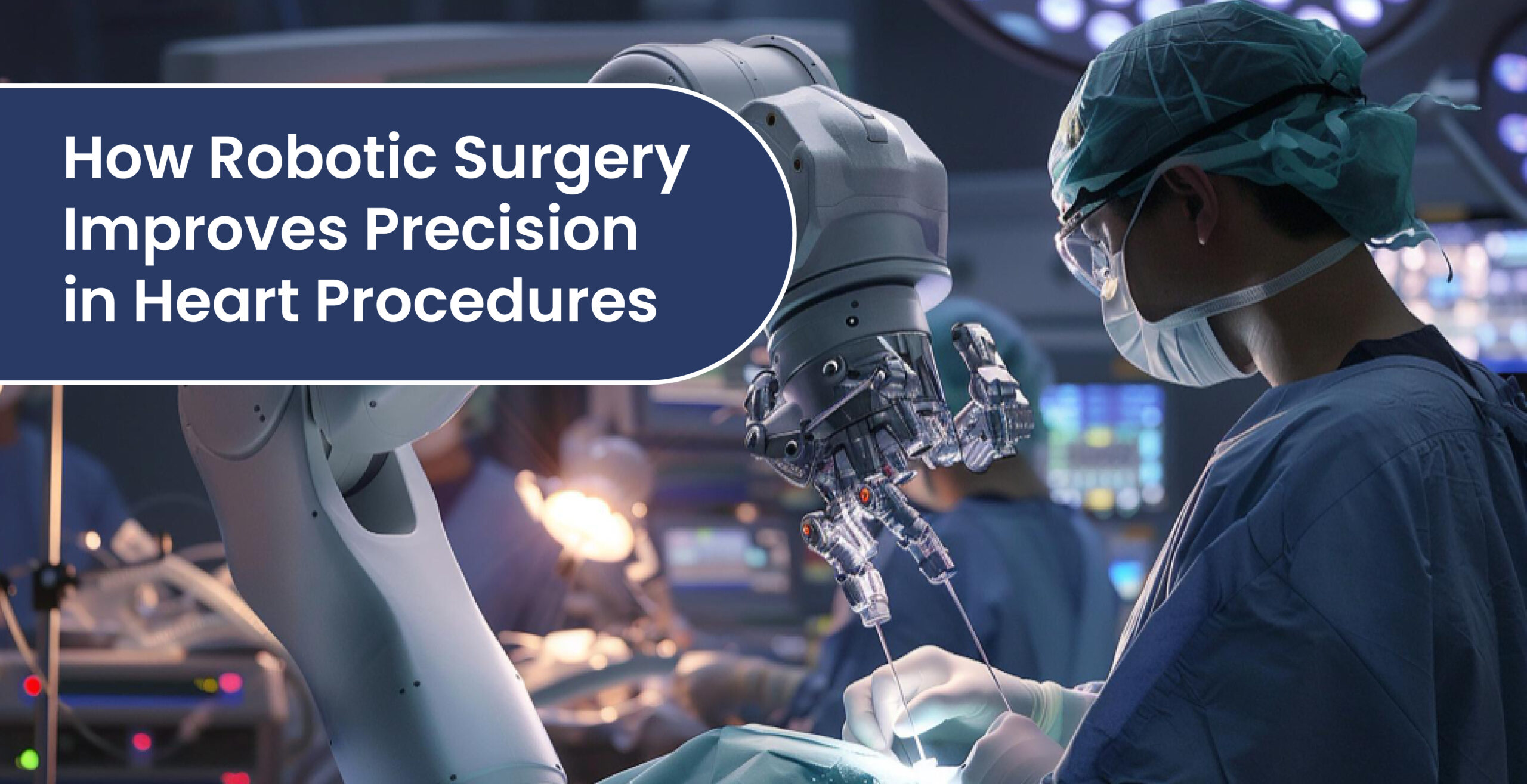
Robotic-assisted heart surgery is a minimally invasive technique where the surgeon controls robotic instruments from a specialized console. These robotic arms do not act on their own—they precisely mirror the surgeon’s hand movements in real time.
The system provides:
High-definition, magnified 3D vision
Ultra-stable, tremor-free instrument movement
Access to hard-to-reach areas of the heart
Enhanced precision through small incisions
Robotic systems are commonly used for procedures such as mitral valve repair, coronary artery bypass surgery (selected cases), atrial septal defect repair, and certain thoracic surgeries.
Why Precision Matters in Heart Surgery
The heart contains critical structures packed into a very small space—valves, arteries, nerves, and muscle tissue all work together continuously. Any surgical intervention must be extremely precise to:
Preserve healthy heart tissue
Avoid injury to surrounding structures
Ensure durable surgical results
Reduce complications and recovery time
Robotic assistance allows surgeons to operate with greater finesse than the human hand alone, especially in tight or deep areas of the chest.
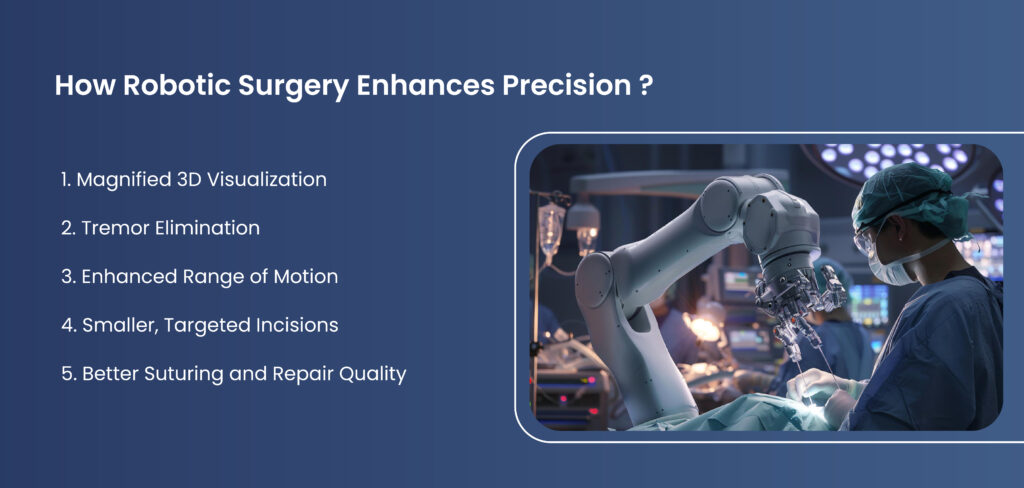
How Robotic Surgery Enhances Precision
1. Magnified 3D Visualization
Robotic systems provide a high-definition, three-dimensional view of the surgical area, magnified several times more than the human eye. This allows the surgeon to clearly see fine structures like valve leaflets, sutures, and small blood vessels.
Better visibility leads to:
More accurate repairs
Reduced risk of accidental injury
Improved surgical confidence
2.Tremor Elimination
Even the steadiest human hands have natural micro-tremors. Robotic systems automatically filter these out, ensuring smooth and stable movements.
This is especially important when:
Placing fine stitches
Repairing delicate valves
Working near critical blood vessels
3. Enhanced Range of Motion
Robotic instruments can rotate and bend beyond the limits of the human wrist. This allows surgeons to perform complex movements in confined spaces without needing large incisions.
As a result:
Procedures become more precise
Less force is applied to surrounding tissues
Surgical accuracy improves significantly
4. Smaller, Targeted Incisions
Traditional open-heart surgery requires opening the chest. Robotic surgery uses small keyhole incisions, allowing surgeons to reach the heart without major disruption.
Smaller incisions contribute to:
Reduced tissue damage
Lower risk of infection
Faster healing
Better cosmetic outcomes
5. Better Suturing and Repair Quality
Precision is especially important in procedures like valve repair, where correct alignment and tension determine long-term success.
Robotic systems help surgeons:
Place sutures with exact spacing
Achieve consistent tension
Perform more refined repairs
This can improve durability and long-term heart function.
What This Means for Patients
Improved precision through robotic surgery often translates into tangible patient benefits, such as:
Less post-operative pain
Reduced blood loss
Shorter hospital stays
Faster return to daily activities
Lower complication rates in selected cases
It’s important to note that robotic surgery is not suitable for every patient. The decision depends on the type of heart condition, overall health, and surgical complexity.
Is Robotic Surgery Replacing Traditional Surgery?
No. Robotic surgery is not a replacement, but an advancement. Traditional open-heart surgery remains the gold standard for many complex cases. Robotic surgery is best suited for carefully selected patients where precision and minimally invasive access offer clear advantages.
An experienced surgeon evaluates each case individually to determine the safest and most effective approach.
Ans: In selected patients, improved precision and smaller incisions may reduce certain risks such as infection, bleeding, and recovery time. Overall safety still depends on patient condition and surgical expertise.
Ans: Robotic systems enhance precision in confined spaces and delicate repairs. However, accuracy ultimately depends on the surgeon’s experience and judgment.
Ans: Robotic procedures may have higher upfront costs due to technology use, but reduced hospital stay and faster recovery can offset long-term expenses in some cases.
Final Thoughts
Robotic-assisted heart surgery represents a major step forward in precision-driven cardiac care. By enhancing vision, stability, and control, robotic systems allow surgeons to perform complex procedures with exceptional accuracy—while offering patients the benefits of minimally invasive surgery.
At Active Heart Clinic, Dr. Shridhar Padagatti carefully evaluates each patient to determine whether robotic surgery is the right choice, always prioritizing safety, effectiveness, and long-term heart health.
Precision saves tissue. Precision improves outcomes. And in heart surgery, precision can truly save lives.
Leave a Comment