Role of a Cardiac Surgeon in Emergency Heart Conditions
February 26, 2026

admindrshridhar
0 Comments
Role of a Cardiac Surgeon in Emergency Heart Conditions
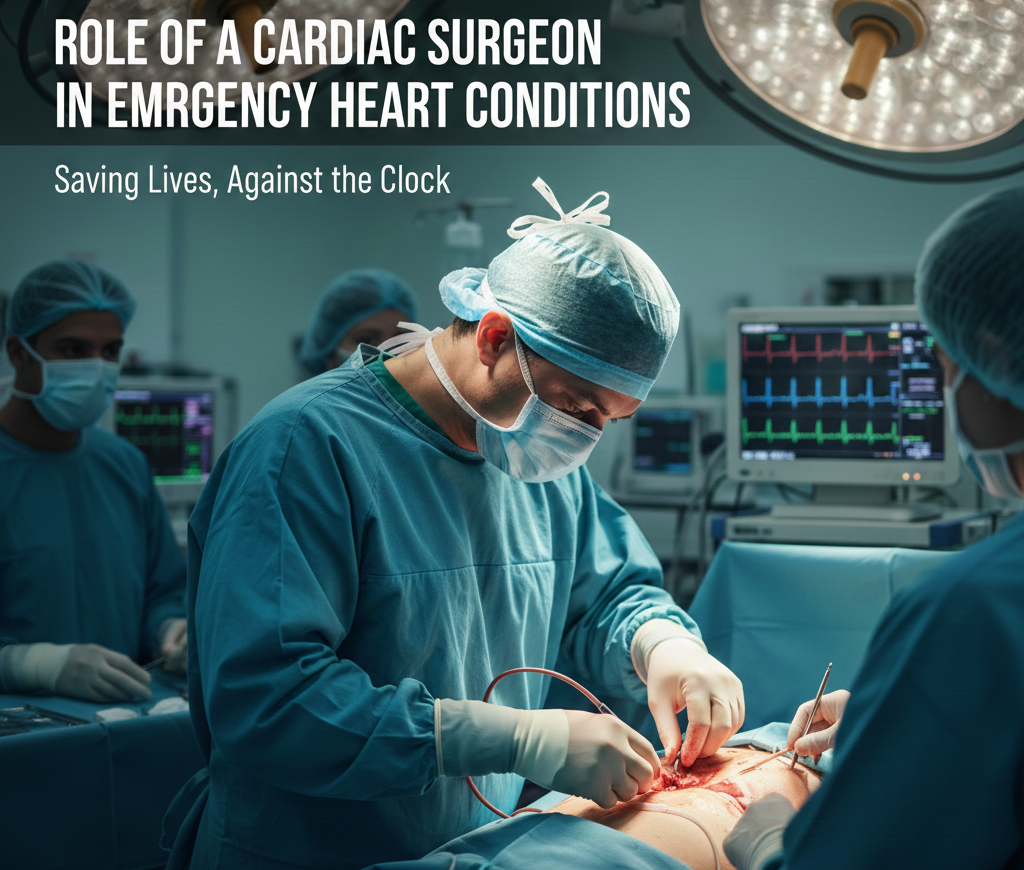
When a heart emergency strikes, every second counts. In these critical moments, a cardiac surgeon plays a life-saving role. While cardiologists often manage heart diseases medically or through minimally invasive procedures, cardiac surgeons step in when urgent surgical intervention becomes the only way to save a patient’s life.
Emergency heart conditions can develop suddenly and may be life-threatening if not treated immediately. Understanding the role of a cardiac surgeon in these high-pressure situations can help patients and families feel more informed and prepared.
What Are Emergency Heart Conditions?
Some of the most common heart emergencies that may require immediate surgical care include:
– Severe heart attack (massive myocardial infarction)
– Acute aortic dissection (tear in the main artery)
– Cardiac tamponade (fluid compressing the heart)
– Ruptured heart valves
– Complications after angioplasty or stent procedures
– Traumatic heart injuries from accidents
In such cases, medications alone are not enough. Surgical expertise becomes essential.
Rapid Assessment and Decision-Making
A cardiac surgeon is trained to make quick, high-stakes decisions. Once a patient arrives in the emergency department, diagnostic tests such as ECG, echocardiography, CT scans, or angiography help determine the severity of the problem.
– The surgeon evaluates:
– The stability of the patient
– Extent of heart damage
– Risk of delaying surgery
– Overall health and comorbid conditions
– Time-sensitive decisions can mean the difference between recovery and irreversible damage.
Performing Emergency Heart Surgery
Depending on the condition, a cardiac surgeon may perform:
If arteries are severely blocked and angioplasty is not possible, emergency bypass surgery restores blood flow to the heart muscle.
2. Aortic Repair Surgery
In cases of aortic dissection or rupture, the surgeon repairs or replaces the damaged section of the aorta to prevent fatal bleeding.
3. Valve Repair or Replacement
If a heart valve suddenly fails or ruptures, urgent repair or replacement may be required to stabilize blood circulation.
4. Pericardial Drainage
In cardiac tamponade, fluid is removed from around the heart to relieve pressure and restore normal pumping.
These procedures are often performed under immense time pressure, requiring precision, teamwork, and advanced surgical skills.
Collaboration with Emergency Teams
Cardiac surgeons do not work alone. Emergency heart care involves a multidisciplinary team including:
– Emergency physicians
– Cardiologists
– Anesthesiologists
– Critical care specialists
– Perfusionists
– Nursing staff
In advanced cardiac centers like those in Mumbai, coordinated teamwork ensures rapid transition from diagnosis to surgery. Efficient communication and preparedness are key factors in improving survival rates.
Managing Post-Surgical Critical Care
The role of a cardiac surgeon extends beyond the operating room. After surgery, patients are shifted to intensive care units (ICUs), where:
– Heart function is closely monitored
– Ventilator support may be provided
– Blood pressure and oxygen levels are stabilized
– Complications like bleeding or infection are prevented
Heart emergencies are traumatic for families. A cardiac surgeon also takes on the responsibility of:
Explaining the condition clearly
Discussing risks and expected outcomes
Providing realistic reassurance
Guiding families through recovery expectations
Clear communication builds trust during uncertain times.
Importance of Early Intervention
One of the most important aspects of emergency cardiac care is early recognition.
Warning signs such as:
– Severe chest pain
– Sudden breathlessness
– Fainting
– Sweating with discomfort
– Sudden tearing chest or back pain
– should never be ignored. Immediate hospital care significantly improves survival chances.
– Delaying treatment can lead to permanent heart damage, organ failure, or even death. Quick surgical response often restores blood flow and prevents long-term complications.
Advancements Improving Emergency Outcomes
Modern cardiac surgery has advanced tremendously. Innovations such as:
– Improved heart-lung machines
– Advanced imaging guidance
– Minimally invasive emergency techniques
– Better ICU monitoring systems
– have increased survival rates even in high-risk emergency cases.
Today, many patients who would not have survived a decade ago can recover and return to normal life due to rapid surgical intervention.
Ans:While not all emergencies can be prevented, managing blood pressure, diabetes, cholesterol, and maintaining a healthy lifestyle significantly reduces risk.
Ans: Call emergency medical services immediately and do not attempt to drive long distances without medical support.
Final Thoughts
The role of a cardiac surgeon in emergency heart conditions is both critical and life-saving. From rapid diagnosis to complex surgical intervention and intensive post-operative care, their expertise ensures that patients facing sudden heart crises have the best possible chance of survival.
Timely action, skilled surgical hands, and coordinated hospital care together form the backbone of emergency cardiac treatment.
Leave a Comment