Understanding Surgical Risk vs. Delaying Heart Treatment
January 29, 2026
admindrshridhar
0 Comments
Understanding Surgical Risk vs. Delaying Heart Treatment
Facing the decision to undergo heart surgery can feel overwhelming. Many patients worry about surgical risks and wonder if waiting a little longer might be safer. While it’s natural to be cautious, delaying recommended heart treatment can sometimes pose greater danger than the surgery itself.
This blog explains what surgical risk really means, what happens when treatment is delayed, and how doctors balance these factors to protect your heart.
What Do Doctors Mean by “Surgical Risk”?
Surgical risk refers to the possibility of complications during or after an operation. These risks depend on multiple factors, including:
– Age and overall health
– Severity of heart disease
– Presence of conditions like diabetes, kidney disease, or lung problems
– Heart function and valve status
Type and complexity of surgery
Common concerns include bleeding, infection, anesthesia-related issues, irregular heartbeat, or prolonged recovery. Importantly, modern cardiothoracic surgery has advanced significantly, making many procedures safer and more precise than ever before.
Surgeons do not recommend surgery lightly. When it is advised, it is because the expected benefit clearly outweighs the risk.
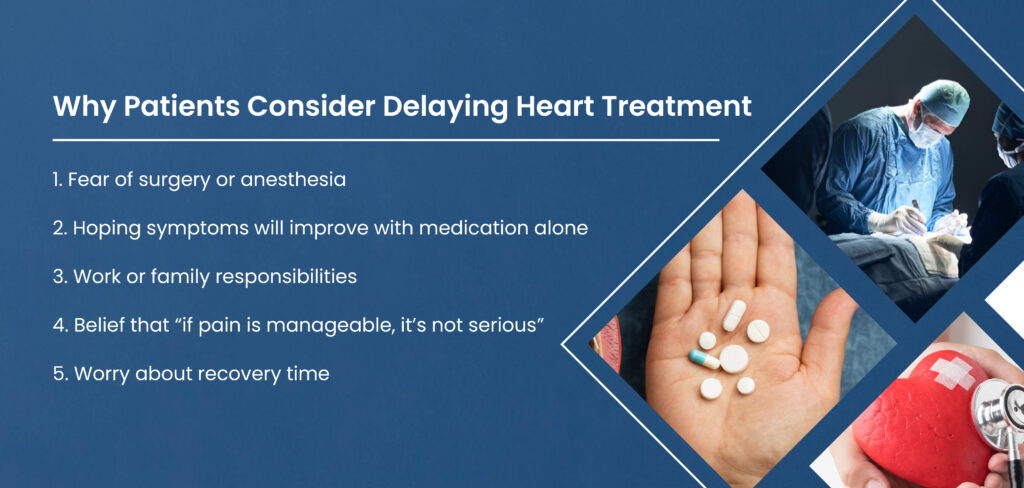
Why Patients Consider Delaying Heart Treatment
Patients often delay treatment for understandable reasons:
– Fear of surgery or anesthesia
– Hoping symptoms will improve with medication alone
– Work or family responsibilities
– Belief that “if pain is manageable, it’s not serious”
– Worry about recovery time
However, heart disease is usually progressive, not static. While symptoms may fluctuate, the underlying problem often continues to worsen silently.
The Hidden Risks of Delaying Heart Treatment
Delaying recommended heart surgery can lead to serious consequences:
Disease Progression
Blocked arteries, damaged valves, or weakened heart muscles rarely heal on their own. Over time, delays can lead to permanent heart damage.
Sudden Cardiac Events
Heart attacks, strokes, or sudden heart failure can occur without warning—especially when blockages or valve problems are untreated.
Reduced Surgical Success
Earlier intervention often allows for simpler procedures and better recovery. Waiting too long can make surgery more complex and risky.
Emergency Surgery
Planned surgery is always safer than emergency surgery. Emergencies leave less time for preparation, increasing complications.
Decline in Quality of Life
Chronic fatigue, breathlessness, swelling, and anxiety can significantly affect daily life if treatment is postponed.
Surgical Risk vs. Delaying Treatment:
How Doctors Decide
Cardiac specialists carefully assess each patient using:
This evaluation helps determine the optimal timing—not too early, not too late.
In many cases, surgery performed at the right time prevents irreversible damage and offers a longer, healthier life.
When Surgery Is Often the Safer Option
Surgery may be safer than waiting when:
– Symptoms worsen despite medication
– There is severe valve narrowing or leakage
– Multiple coronary arteries are blocked
– Heart pumping function is declining
– There is repeated hospitalization for heart failure
– In such situations, delaying treatment increases risk—not reduces it.
– How Modern Heart Surgery Reduces Risk
– Advancements that improve safety include:
– Minimally invasive and off-pump techniques
– Improved anesthesia and monitoring
– Better infection control
– Enhanced recovery protocols
– Multidisciplinary surgical teams
These improvements have significantly lowered complication rates and shortened recovery times.
Emotional Readiness Matters Too
Fear is natural, but understanding reduces anxiety. Patients who ask questions, involve family, and trust their medical team often feel more confident and recover better.
At Active Heart Clinic, we believe informed patients make stronger decisions.
Ans: Not always. Mild symptoms can still indicate serious disease. Many heart conditions worsen silently, so early treatment may prevent complications.
Ans: Follow medical advice, control diabetes and blood pressure, quit smoking, maintain nutrition, and stay physically active within limits.
Final Thoughts
Choosing heart surgery is never easy—but delaying necessary treatment can be far riskier than the surgery itself. Modern cardiac care focuses on precision, safety, and timing to ensure the best possible outcomes.
If you are unsure whether to proceed with recommended heart treatment, seek clarity—not delay. A detailed discussion with your heart specialist can help you move forward with confidence.
Leave a Comment