Leg Pain While Walking: Could It Be a Vascular Problem?
May 11, 2026
admindrshridhar
0 Comments
Leg Pain While Walking: Could It Be a Vascular Problem?
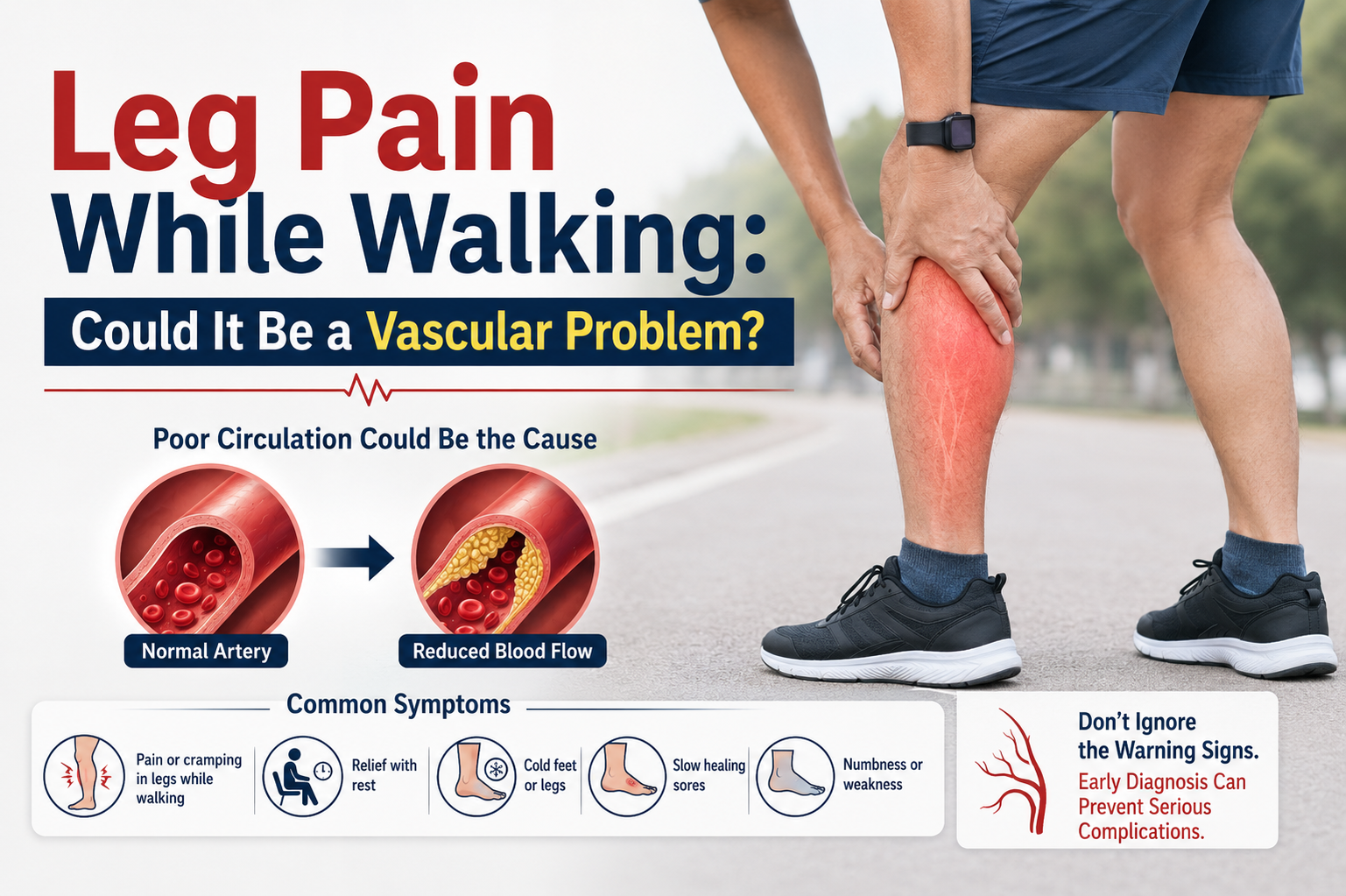
Leg pain while walking is often dismissed as muscle fatigue, aging, or joint stiffness. But in some cases, it may actually be a warning sign of an underlying vascular condition. When blood flow to the legs becomes restricted, even simple activities like walking short distances can become painful and exhausting.
Understanding the connection between circulation and leg pain is important because untreated vascular disease can lead to serious complications over time.
What Is a Vascular Problem?
A vascular problem refers to conditions affecting blood vessels—arteries and veins—that carry blood throughout the body. One common condition associated with leg pain is Peripheral Artery Disease (PAD).
PAD occurs when arteries supplying blood to the legs become narrowed or blocked due to plaque buildup, reducing oxygen-rich blood flow to muscles during movement.
Why Does Leg Pain Happen While Walking?
When you walk, your leg muscles require more oxygen and blood flow. If the arteries are narrowed, the muscles do not receive enough oxygen, resulting in pain or discomfort known as claudication.
The pain typically:
Starts during walking or exercise
Improves with rest
Returns when activity resumes
This pattern is one of the key warning signs of vascular disease.
Common Symptoms of Peripheral Artery Disease
In addition to leg pain while walking, PAD may cause:
Cramping in calves, thighs, or buttocks
Weakness or heaviness in the legs
Cold feet or lower legs
Numbness or tingling
Slow-healing wounds on the feet
Changes in skin color or hair loss on legs
Weak pulse in the feet
Symptoms often develop gradually, making them easy to ignore in the early stages.
Risk Factors for Vascular Disease
Several lifestyle and medical factors increase the risk of PAD and other vascular conditions:
1. Smoking
Smoking damages blood vessels and significantly increases plaque buildup.
2. Diabetes
High blood sugar can damage arteries and impair circulation.
3. High Cholesterol
Excess cholesterol contributes to narrowing of the arteries.
4. High Blood Pressure
Hypertension strains artery walls and accelerates vascular damage.
5. Obesity and Sedentary Lifestyle
Lack of exercise and excess weight affect circulation and overall vascular health.
6. Aging
The risk of vascular disease increases with age, especially after 50.
Treatment Options for Vascular Leg Pain
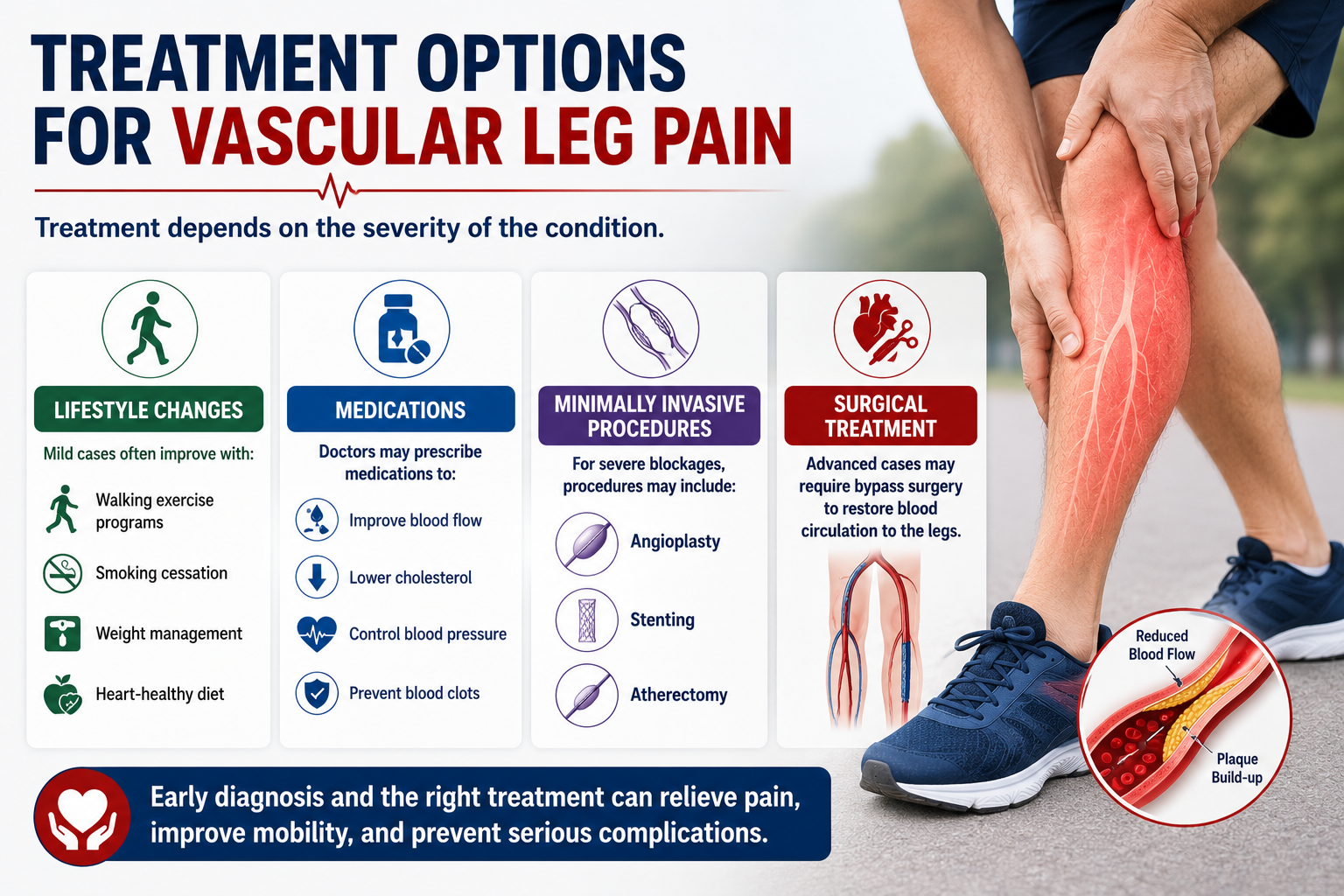
Treatment depends on the severity of the condition.
Lifestyle Changes
Mild cases often improve with:
Walking exercise programs
Smoking cessation
Weight management
Heart-healthy diet
Medications
Doctors may prescribe medications to:
Improve blood flow
Lower cholesterol
Control blood pressure
Prevent blood clots
Minimally Invasive Procedures
For severe blockages, procedures may include:
Angioplasty
Stenting
Atherectomy
Surgical Treatment
Advanced cases may require bypass surgery to restore blood circulation to the legs.
Why Early Treatment Matters
Ignoring vascular-related leg pain can lead to worsening circulation problems. Severe PAD may eventually cause:
Persistent pain even at rest
Non-healing wounds
Tissue damage
Increased risk of stroke or heart attack
Because vascular disease affects the entire circulatory system, leg symptoms may also indicate underlying heart disease.
Tips to Improve Leg Circulation
Simple habits can help support vascular health:
Walk regularly
Avoid sitting for long periods
Stay hydrated
Quit smoking
Manage diabetes and blood pressure
Maintain healthy cholesterol levels
Regular medical check-ups are especially important for people with diabetes or a family history of vascular disease.
Consult a doctor if you experience recurring leg pain while walking, cold feet, numbness, non-healing wounds, or sudden worsening symptoms.
Final Thoughts
Leg pain while walking should never be ignored—especially if it repeatedly occurs during activity and improves with rest. It may be your body’s way of warning you about an underlying vascular condition affecting blood circulation.
Early diagnosis and treatment can prevent serious complications and help you maintain mobility, independence, and overall cardiovascular health.
Leave a Comment